
How Getting Mold Quotes in Naples Works
How our free quote and referral service works, and what Florida-licensed mold assessors and remediators typically do once you hire them.
Get a Free QuoteGetting quotes, step by step
Naples FL Mold Remediation is a free quote and referral service. We connect Naples and Collier County homeowners with Florida-licensed mold assessors and remediators. We don’t do any mold work ourselves.
Tell us what you’re seeing
Fill out the free quote form with where you see or smell mold, roughly how large the area is, whether it’s a house or condo, and any recent leaks, storm water or long AC outages. Photos help if you have them.
We follow up
We usually reply the same day to confirm the details and understand what kind of help you need: an assessment, remediation, or both.
Get connected with licensed local pros
We help connect you with Florida-licensed mold assessors and remediators who serve your part of Collier County, so you can get quotes.
Verify and compare
Ask each company for its Florida license number and verify it at MyFloridaLicense.com. Compare written scopes, not just totals: what is included, how the area is contained, and who fixes the moisture source.
Choose who to hire
You decide. There is no cost to you for our help and no obligation to hire anyone.
Ready to start? Request your free quote. We usually reply the same day.
What licensed mold pros typically do in Florida
Every job is different. This is a general outline of how mold assessment and remediation usually go, so you know what to expect and what to ask about.
Stop the water
EPA’s mold guide says, “If you clean up the mold, but don’t fix the water problem, then, most likely, the mold problem will come back.” A plumber, roofer or HVAC contractor may be needed first. After flooding, EPA says to dry water-damaged areas and items within 24–48 hours to prevent mold growth.
Mold assessment
A Florida-licensed mold assessor typically inspects the home, takes moisture readings and, when useful, samples. EPA notes that in most cases, if visible mold growth is present, sampling is unnecessary. The assessor may write a remediation protocol describing what should be removed and cleaned.
Containment
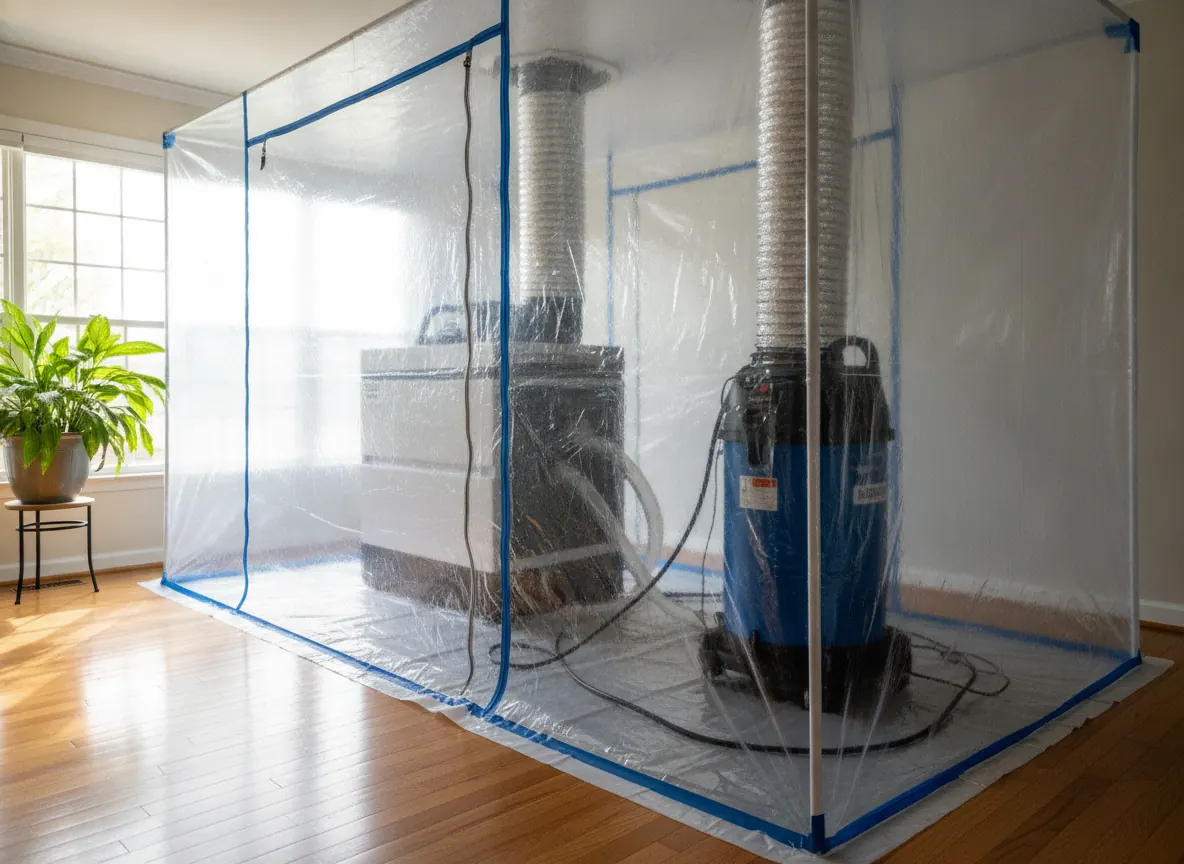
During remediation, crews typically seal off the work area with plastic sheeting and a zipper door and may run air scrubbers to keep spores from spreading to the rest of the home.
Removal and cleaning
Porous materials with growth, such as drywall, insulation, baseboards or carpet, are typically cut out and bagged. Hard surfaces are cleaned. In AC systems, work may involve the air handler, coil, drain pan or ducts.
Drying
Dehumidifiers and fans typically run until materials are dry. In Naples’ wet season, high outdoor humidity means the AC and dehumidifiers do much of this work.
Clearance check
Many homeowners have an independent assessor check the area after remediation. Under s. 468.8419, the assessor and remediator for the same structure are typically separate companies, except Division I certified contractors.
Rebuild
Replacing drywall, cabinets and trim is often a separate scope. Florida Statutes s. 468.8411 says remediation may not include work requiring a ch. 489 license unless done by someone licensed under that chapter. In Collier County, repair and rebuild work needs a building permit, and multi-family buildings need a permit for any work after a storm.
Florida rules that shape the process
Florida Statutes s. 468.8411 defines mold assessment and mold remediation as work on mold growth of more than 10 square feet, and Florida requires a state license to perform or offer that work. EPA’s mold guide says homeowners can usually handle areas smaller than about 10 square feet themselves.
Under s. 468.8419, a mold assessor may not perform or offer remediation on a structure it assessed within the last 12 months, with a mirror rule for remediators. That is why the company that assesses your home and the company that remediates it are typically separate companies. Division I certified contractors are exempt under the statute.
Ask any company for its Florida license number and verify it at MyFloridaLicense.com. This is general information, not legal advice.
Naples situations that change the process
- Condos: association rules, access to common elements and the insurance split under s. 718.111(11) can affect scheduling and who handles which repairs. See condo and HOA mold.
- After a storm: Collier County says wet drywall, cabinet, carpet and baseboard removal needs no permit, but rebuild does. See hurricane and storm-surge mold.
- Seasonal homes: if you are out of town, a friend or property manager may need to provide access. See seasonal and second-home mold.
- Budget: check typical ranges in the mold remediation cost guide before comparing quotes.
Have more questions? Read the mold FAQ.
Seeing or smelling mold? Get a clear plan.
Free, no-pressure quotes from Florida-licensed pros across Naples, Marco Island, Golden Gate and Collier County.