
AC & HVAC Mold in Naples, FL
Musty air when the AC kicks on, growth on vents, or a dripping air handler? We'll help Naples and Collier County homeowners get quotes from Florida-licensed mold pros and the HVAC contractors the job may need.
Get a Free Quote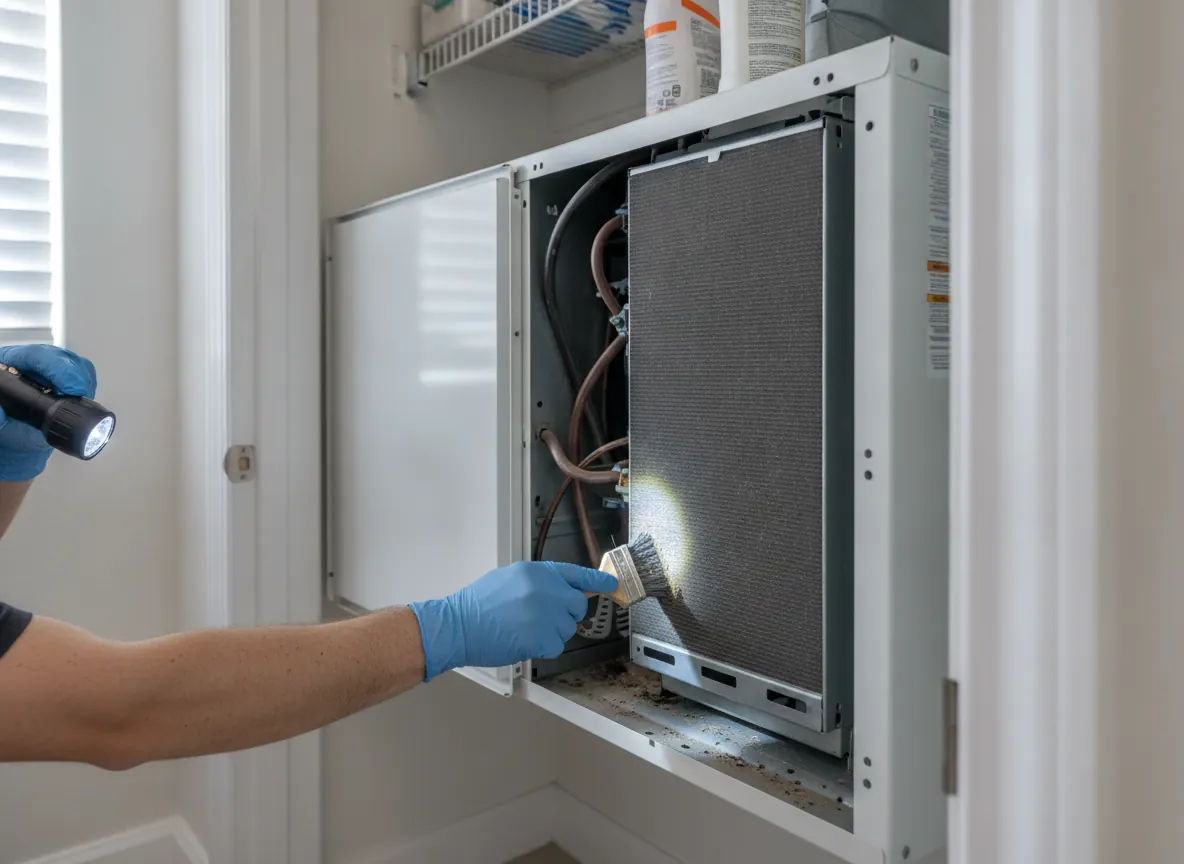
Why the AC system is a mold magnet in Naples
Air conditioning is how Naples homes get rid of moisture, which means the AC system is where much of that moisture ends up. The evaporator coil is wet whenever the system runs, condensate collects in the drain pan, and supply ducts in hot attics can sweat. Our own averages of NOAA hourly observations at Naples Municipal Airport for 2015–2024 show the dew point at or above 70°F in about 49% of all hours of the year, and in about 93–99% of hours from June through September. That's a lot of water for one system to handle.
Naples FL Mold Remediation is a free quote and referral service. We connect Naples and Collier County homeowners with Florida-licensed mold assessors and remediators; we are not an AC, duct-cleaning or mold company. Ask any company for its Florida license number and verify it at MyFloridaLicense.com.
Signs of mold in your AC or ducts
- A musty or "dirty sock" smell that gets stronger when the system starts
- Dark spotting on supply registers, return grilles or the ceiling around them
- Water in or around the air handler, a full drain pan or a tripped float switch
- Stained or soft drywall in the air handler closet
- Indoor humidity that stays high even with the AC running
- A home that was closed for the season or lost power for days after a storm
Dark spots on registers are sometimes condensation-related growth on the grille surface, and sometimes a sign of a larger problem upstream. An independent assessment helps tell the difference. See mold inspection & testing.
Mold remediation and HVAC licensing in Florida
Florida Statutes s. 468.8411(5) defines mold remediation as the removal, cleaning, sanitizing, demolition or other treatment of mold or mold-contaminated matter of greater than 10 square feet, and adds that it "may not be work that requires a license under chapter 489 unless performed by a person who is licensed under that chapter." AC and duct work often falls under chapter 489, which covers contractors including mechanical and air-conditioning trades. In practice an HVAC mold job may involve a licensed mold remediator for the cleanup and a licensed AC contractor for replacing coils, air handlers or duct sections.
Florida also keeps assessment and remediation apart. Under s. 468.8419, an assessor may not remediate a structure it assessed within the last 12 months, and a mirror rule applies to remediators, with an exception for Division I certified contractors. The assessor and remediator are typically separate companies.
This is general information, not legal advice.
What HVAC mold work typically involves
Scopes vary by system and by how far growth has spread.
Assessment
A licensed assessor looks at the air handler, coil, drain pan, plenums, ducts and the surrounding closet and finds the moisture cause.
Isolate the system
The system is usually shut down and registers sealed so cleaning does not push debris through the house.
Clean or replace components
Hard components may be cleaned; porous parts like duct board, flex duct and liner with growth are often replaced, which may need an AC contractor.
Fix the moisture problem
EPA warns that if the water problem isn't fixed, the mold will most likely come back. That can mean clearing drains, sealing and insulating ducts, or correcting system sizing.
Verify
Many homeowners have an independent check done before the system goes back into normal use.
Keeping AC mold from coming back
UF/IFAS Extension's "Closing Your Seasonal Home" recommends that owners "have the humidistat calibrated by your air conditioning company" and notes that "periodic air conditioner operation will remove moisture from your home." LCEC, a Southwest Florida electric cooperative, says "mold and mildew can grow nearly anywhere if the relative humidity is consistently 70 percent or higher," and its "Vacant Homes" guide describes a humidistat set to cycle the AC "whenever indoor humidity exceeds 65 percent." See seasonal home mold for the full guidance if your home sits empty part of the year.
If you're replacing equipment, Collier County's 2026 floodplain newsletter says new machinery such as AC units and generators must be elevated to base flood elevation plus 1 ft. If surge reached your air handler or ducts, see hurricane & storm-surge mold. Note that Collier's July 1, 2026 permit exemption for qualifying work under $7,500 excludes mechanical work, so AC replacement still goes through permitting.
If anyone in the home has health concerns, talk to a doctor.
What AC and duct mold work typically costs
| Item | Typical range |
|---|---|
| HVAC system and ducts | $3,000–$10,000 |
| Mold inspection | $450–$800 (national avg about $500; Florida avg about $739); extra samples $60–$80 each |
| Small area (~50 sq ft) | $500–$1,500 |
Note: remediation quotes may not include inspection or clearance testing (This Old House). The real price comes from a licensed pro's on-site assessment.
Any drywall or closet repairs around the air handler are priced on top. See the full cost guide, or request free quotes and mention your system's age and whether it has had water in it.
Frequently asked questions
How much does it cost to remove mold from AC ducts?
Cost guides put mold remediation for an HVAC system and ducts at about $3,000–$10,000. That is a typical national range from cost guides, 2025–2026, not a quote. The final price depends on how much of the system is affected, whether duct sections or the air handler need replacing, and whether drywall around the air handler closet also needs work.
Can mold in my AC make the whole house smell?
Yes, a musty smell that gets stronger when the system starts is a common clue, because air moves past the coil and through the ducts to every room. The smell alone does not tell you how far growth has spread. An independent, Florida-licensed mold assessor can check the air handler, drain pan and ducts and find the moisture cause.
Who should clean mold in an air handler, a mold company or an AC company?
Often both are involved. Florida Statutes s. 468.8411(5) says mold remediation may not include work that requires a chapter 489 license unless done by someone licensed under that chapter. A licensed remediator may handle cleanup while a licensed AC contractor replaces coils or duct sections. Verify every license at MyFloridaLicense.com. This is general information, not legal advice.
Why does my AC keep getting mold in Naples?
Naples air carries a lot of moisture: our averages of NOAA hourly observations for 2015–2024 show the dew point at or above 70°F in about half of all hours. Clogged drain lines, sweating ducts, oversized systems and long shutdowns all leave water behind. EPA warns that if the water problem is not fixed, the mold will most likely come back.
Should I run my AC if I think it has mold?
If you see growth on the coil or in the ducts, or the musty smell is strong, ask a licensed professional before running the system heavily, since airflow moves through every room. In Naples heat, turning the AC off for long periods also raises humidity, so get an assessment scheduled quickly rather than leaving the home unconditioned.
Seeing or smelling mold? Get a clear plan.
Free, no-pressure quotes from Florida-licensed pros across Naples, Marco Island, Golden Gate and Collier County.