
Mold Inspection & Testing in Naples, FL
Musty smell, stains you can't explain, or a home that sat closed all summer? We'll help you get quotes from independent, Florida-licensed mold assessors in Naples and Collier County.
Get a Free Quote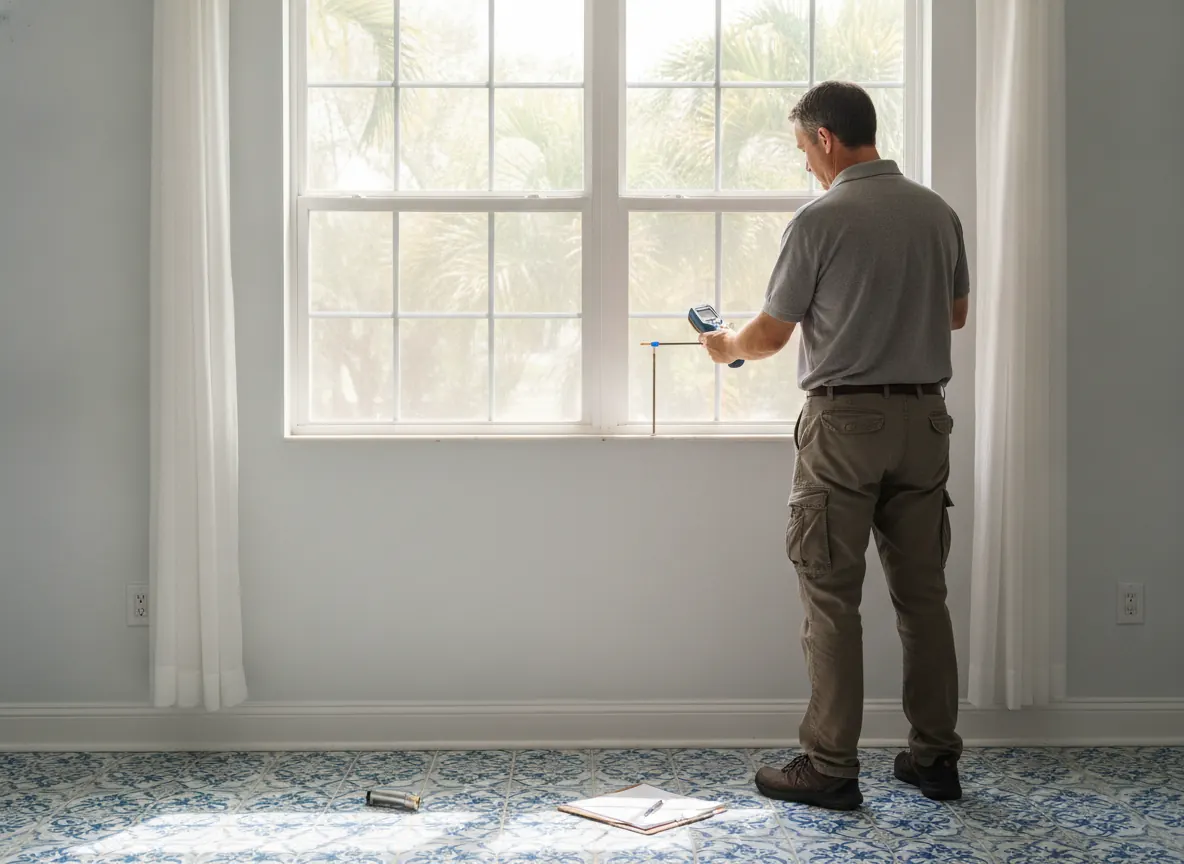
Why an independent assessor comes first
A mold assessment answers three questions before anyone opens a wall: where is the mold, how far does it go, and what moisture is feeding it. In Florida that job belongs to a licensed mold assessor. Florida Statutes s. 468.8411(3) defines mold assessment as covering "mold growth of greater than 10 square feet," and the state requires a license to perform or offer to perform it.
Naples FL Mold Remediation is a free quote and referral service. We connect Naples and Collier County homeowners with Florida-licensed mold assessors and remediators; the assessments themselves are done by the licensed assessors, not by us. Ask any company for its Florida license number and verify it at MyFloridaLicense.com.
Florida's 12-month rule: assessor and remediator are typically separate
Florida Statutes s. 468.8419(1)(d) says a mold assessor may not "perform or offer to perform any mold remediation to a structure on which the mold assessor or the mold assessor's company provided a mold assessment within the last 12 months." A mirror rule in s. 468.8419(2)(d) applies to remediators. Division I certified contractors under s. 489.105(3) are exempt, and the state may require them to disclose "the right to request competitive bids."
The practical result is that the company that assesses your home and the company that remediates it are typically separate. An independent assessment gives you a written scope you can hand to more than one remediator for quotes, and many homeowners have the same assessor come back afterward to check the work.
This is general information, not legal advice.
Do you actually need mold testing?
Not always. EPA's mold guide says: "In most cases, if visible mold growth is present, sampling is unnecessary." If you can already see growth, the more useful questions are how big the area is and where the water is coming from. EPA also notes that if the moldy area is less than about 10 square feet, homeowners can usually handle the cleanup themselves.
An assessment and, where the assessor thinks it is useful, sampling tend to make more sense when:
- You smell mustiness but can't see the source, for example behind cabinets, inside walls or around the air handler
- There was a leak, flood or storm surge and you need to know how far moisture traveled
- You're buying or selling, or closing a condo for the season and want a baseline
- A seasonal home was closed for months and you're reopening it (see seasonal home mold)
- Remediation is finished and you want an independent check before walls are closed
- A condo association, insurer or landlord asks for written documentation
If anyone in the home has health concerns, talk to a doctor; an assessment describes the building, not anyone's health.
What a mold assessment typically includes
Every assessor works a little differently. Ask what is included before you book.
Walk-through and history
The assessor usually asks about leaks, storms, AC service and how long the home sits closed, then looks at the areas of concern.
Moisture readings
Moisture meters and often thermal cameras help trace wet drywall, baseboards and ceilings back to the source.
Sampling, if warranted
Air or surface samples may be taken and sent to a lab. Extra samples usually cost more, so ask how many the quote covers.
Written report and protocol
The report typically describes affected areas and a remediation protocol a separate licensed remediator can price.
Mold inspection in Naples condos, high-rises and seasonal homes
Much of Naples' housing is in larger buildings: the American Community Survey (2020–2024) puts the share of homes in buildings with 5+ units at about 59.9% in the City of Naples and 70.4% in Pelican Bay. In those buildings a leak can start in one unit, a common wall or a shared pipe, so a written assessment that identifies the source helps when owners and the association sort out who handles what. Our condo & HOA mold page explains the statutes involved.
Seasonal homes are the other big Naples case. The same survey counts 7,707 housing units in the City of Naples, about 40.8% of all units, as vacant for seasonal, recreational or occasional use. A home that sat closed through a humid summer is a common reason to book an assessment before moving back in.
What mold inspection typically costs
| Item | Typical range |
|---|---|
| Mold inspection | $450–$800 (national avg about $500; Florida avg about $739); extra samples $60–$80 each |
Note: remediation quotes may not include inspection or clearance testing (This Old House). The real price comes from a licensed pro's on-site assessment.
Remediation is priced separately, and per our cost guide, remediation quotes may not include inspection or clearance testing. When you request quotes, mention whether you want an initial assessment, post-remediation clearance or both.
Frequently asked questions
How much does a mold inspection cost in Naples?
Cost guides put a typical mold inspection at $450–$800, with a national average of about $500 and a Florida average of about $739. Extra samples usually add $60–$80 each. These are typical national ranges from cost guides, 2025–2026, not quotes. The real price depends on home size, access and how many samples the assessor recommends.
Do I need mold testing if I can see the mold?
Often not. EPA's mold guide says that in most cases, if visible mold growth is present, sampling is unnecessary. The more important steps are measuring how far the growth extends and finding the moisture source. An assessment can still help when the area is large, hidden, tied to a flood, or needs written documentation for an association or insurer.
Can the mold inspector also do the remediation?
Under Florida Statutes s. 468.8419(1)(d), a mold assessor may not remediate a structure it assessed within the last 12 months, and a mirror rule covers remediators. Division I certified contractors are exempt under the statute. So the assessor and remediator are typically separate companies. This is general information, not legal advice.
Is a mold assessor license required in Florida?
Yes, for work covered by the statute. Florida Statutes s. 468.8411(3) defines mold assessment as covering mold growth of greater than 10 square feet, and Florida requires a state license to perform or offer to perform it. Ask the assessor for a license number and verify it at MyFloridaLicense.com before you book. This is general information, not legal advice.
Should I get a clearance check after remediation?
Many homeowners do, especially before walls are closed or a condo unit is reoccupied. A post-remediation check by an independent licensed assessor gives you a second set of eyes on the work. Ask about it up front, because remediation quotes may not include inspection or clearance testing, according to This Old House.
Seeing or smelling mold? Get a clear plan.
Free, no-pressure quotes from Florida-licensed pros across Naples, Marco Island, Golden Gate and Collier County.